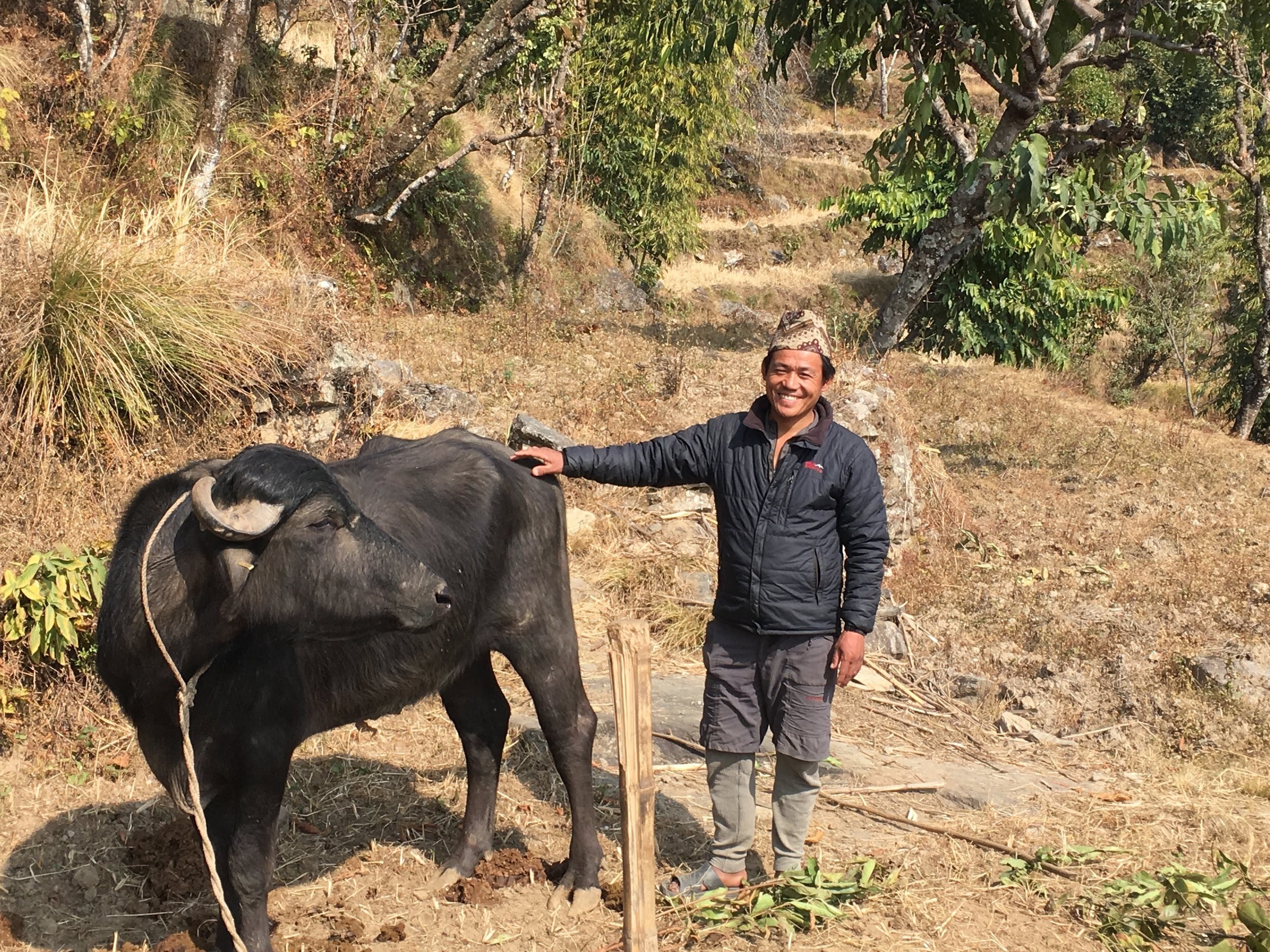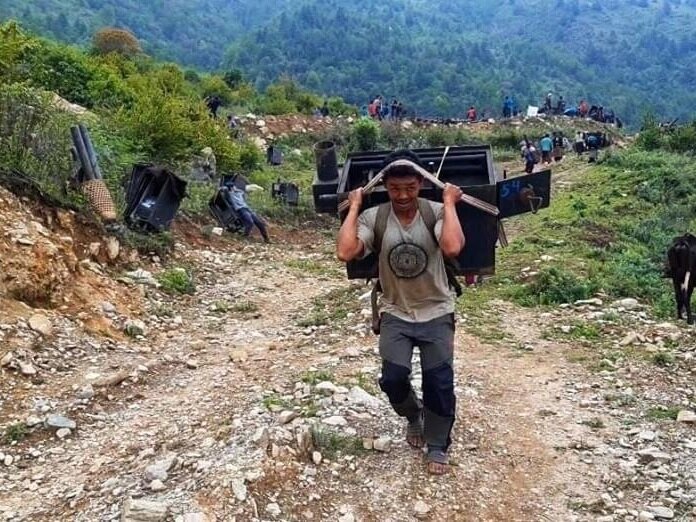
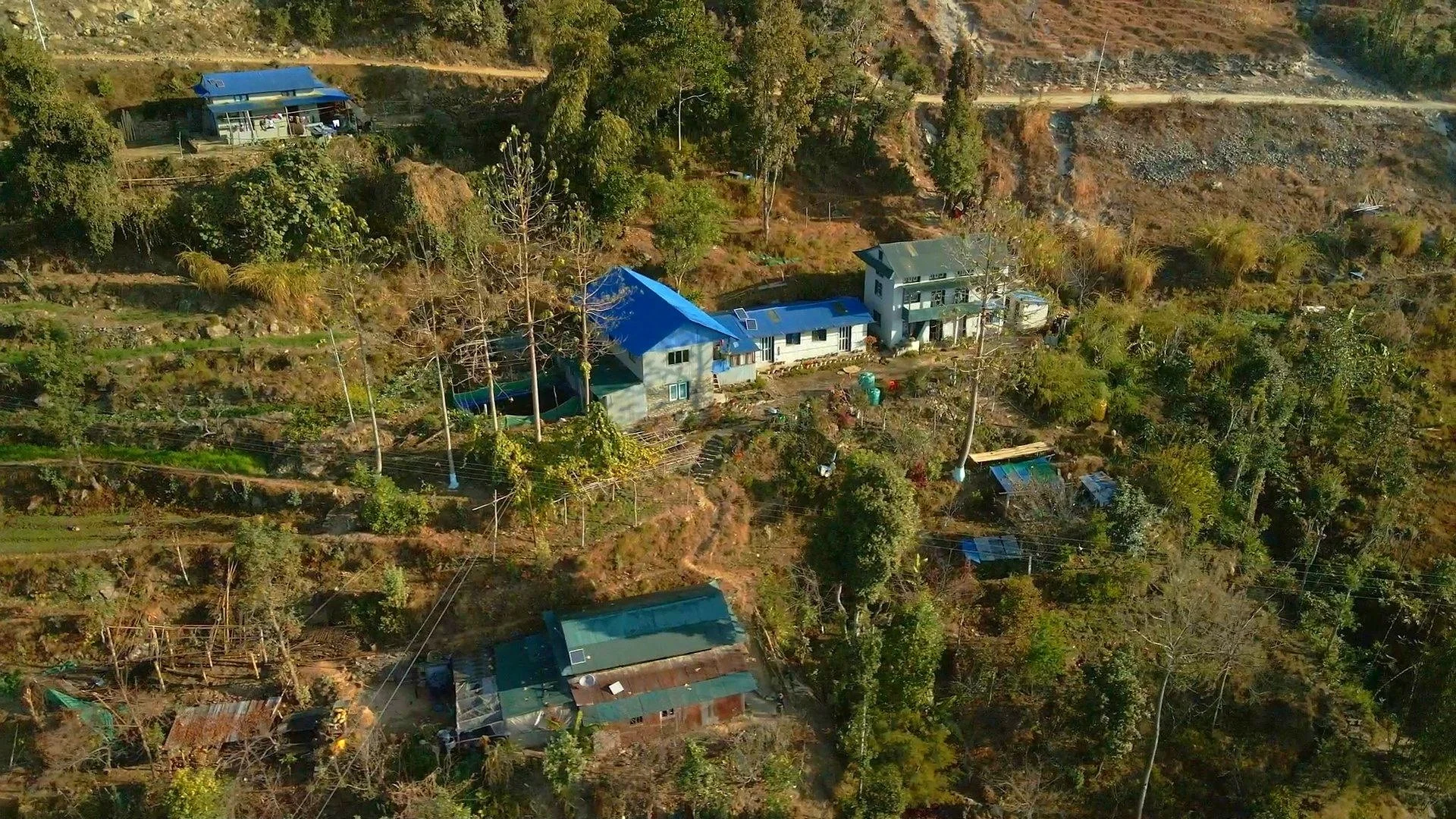
Gauri Shankar from Tinsang La
(3320m, 10300 feet)
Why we are here:
GlacierGate or GlacierTrustGate?
Most of us will have seen the recent controversy about the rate at which glaciers are melting in the Himalayas, as reportorted by the IPCC. Some elements of the press have rightly focussed upon culpable misinterpretation of data and very poor checking of sources. But this has obscured the fundamental fact that in the Himalayas the atmosphere is actually warming faster (between two and three times faster) than at sea level. Simply put: The higher you go the more the atmosphere is warming. Changes in climate are already the reality for subsistence communities living at high altitudes. Volatile weather patterns can threaten their survival. The Glacier Trust provides scientific and financial support to established NGOs working in Nepal at grass roots level, enabling the worst affected communities to adapt to their changing circumstances.See.About Us.
What we are doing:
Because of Nepal’s topographical diversity, the effects of climate change vary form region to region. Our projects are designed to reflect the problems experienced in three such geographical areas: The Low Hills (Siwaliks); the Mid Hills (Pahad) and High Hills (Himal). Initially, each project focuses on a particular community and is then replicated and developed into neighbouring communities or those facing similar problems. This builds the capacity of communities to adapt and share solutions and provides an excellent basis for scientific training, research and analysis. Our first two projects (Low and Mid Hills) are under way. (See Recent Posts opposite.) The third, the Himal project, dealing with the problems of glacial and permafrost melt, is being designed at present.
Donations:
The Glacier Trust is a UK registered charity, Number 1124955.If you live in the UK and would like to support our work, the most cost effective way is to send a cheque made payable to The Glacier Trust to us at North Wing, Roundway House, Devizes, Wiltshire, SN10 2EG. You can print off a GiftAid form. Alternatively, and from anywhere in the world, you can use the button below:
This is a secure site organised through the UK Charities' Aid Foundation (CAF). It will enable us to reclaim tax paid by UK tax payers, but is open to all donors world wide. But PLEASE tell us by email Contact Us when you do so! This will enable us to make sure your gift arrives safely and is acknowledged.
If you are donating form the UNITED STATES, please kindly Contact Us before donating and we will email you the form by which you can claim your tax deduction, through the American Fund for Charities. All donations will be acknowledged.
All donations are treated as confidential (unless otherwise agreed by you).
How much of your donation goes on admin?
ZERO! The Glacier Trust is managed on a voluntary basis by its five trustees. All our first two years' costs have been covered by a founder’s grant, to ensure that 100% of all your donations hit their target.
Circumventing Corruption:
Worries about the corrupt siphoning of funds can be a serious deterrent to charitable giving. In our case, all the projects we support are researched and vetted by the director by field trips to the project areas. We work with established NGOs who have a proven track record. With our relatively small scale projects we believe it is possible to verify both the amounts of money needed and to log its expenditure accurately. It’s simply a matter of doing the donkey work to ensure penny pinching accountability.
Scientific Reporting and Reviews:
Much of the recent scientific research regarding the effects of climate change is not available, where it is most needed, in the communities most affected. Part of the objective of The Glacier Trust is to make scientific research more available by publishing updated reviews of scientific literature, both to help NGOs' work in capacity building and to identify areas where further research is needed. Such reviews will be preceded by executive summaries, which will be written with the lay reader in mind. The first review is scheduled for January 2010.